
Reservations, rooms, guests, housekeeping, restaurant, inventory, payments, and accounts often sit in separate records.
Product Case Study
How HotelDesk connects reservations, guest service, hotel finance, and reporting
HotelDesk is Zamacore’s operating platform for independent hotels, lodges, serviced apartments, and accommodation teams. This case study explains the hospitality problem behind the product, its connected operating workflow, and the public evidence a buyer can inspect. It uses real product materials and published plans without anonymous testimonials or invented results.
HotelDesk connects booking, stay operations, service delivery, cashiering, finance, compliance, and reporting.
Buyers can review the operating view, workflow modules, walkthrough, trial, and published plans.
The hotel-operations problem HotelDesk addresses
A hotel coordinates inventory that changes every day. A room may be available, reserved, occupied, dirty, under inspection, blocked, or out of service. A guest booking can change dates, room type, occupancy, rate, inclusions, payment status, and special requirements. Housekeeping, reception, restaurant, cashiers, stores, finance, and management all depend on current information about the same stay.
When departments work from separate books, spreadsheets, and applications, updates arrive late. Reception may sell a room that operations has blocked. Housekeeping may not see a departure. Restaurant charges may not reach the correct guest folio. M-Pesa and cash records can differ from cashier reports. Finance spends time rebuilding journals, while managers wait for occupancy and revenue information.
HotelDesk addresses this coordination problem by connecting room availability, reservations, guests, check-in, housekeeping, POS orders, inventory, cashiering, M-Pesa, eTIMS, accounting, shift close, and hotel reporting. Each module contributes to one operating record rather than forcing teams to reconstruct the guest and financial journey afterward.
The HotelDesk operating workflow
1. Manage availability
Maintain rooms, room types, rates, occupancy, reservations, blocks, and operational status so the team can make booking decisions from a current view.
2. Reserve and check in
Capture guest details, stay dates, rate, occupants, payment terms, amendments, deposits, and required documents under the correct reservation and folio.
3. Run the stay
Coordinate housekeeping, room status, guest requests, restaurant or POS orders, inventory, and authorised charges during the stay.
4. Collect and comply
Connect cashiers, cash and M-Pesa payment records, receipts, eTIMS processes, and traceable financial activity under suitable controls.
5. Check out and close
Review folio charges, payments, balances, room release, housekeeping status, and the financial records required to close the guest stay.
6. Report performance
Use journals, trial balance, profit and loss, occupancy, arrivals, revenue, payment, and operations reports created from daily transactions.
Evidence buyers can inspect
HotelDesk’s public evidence shows a real hotel operating view, the connected workflow modules, and published plan information. Accommodation teams can compare these materials with their rooms, outlets, users, guest journey, housekeeping process, payments, compliance, accounts, and management reporting.
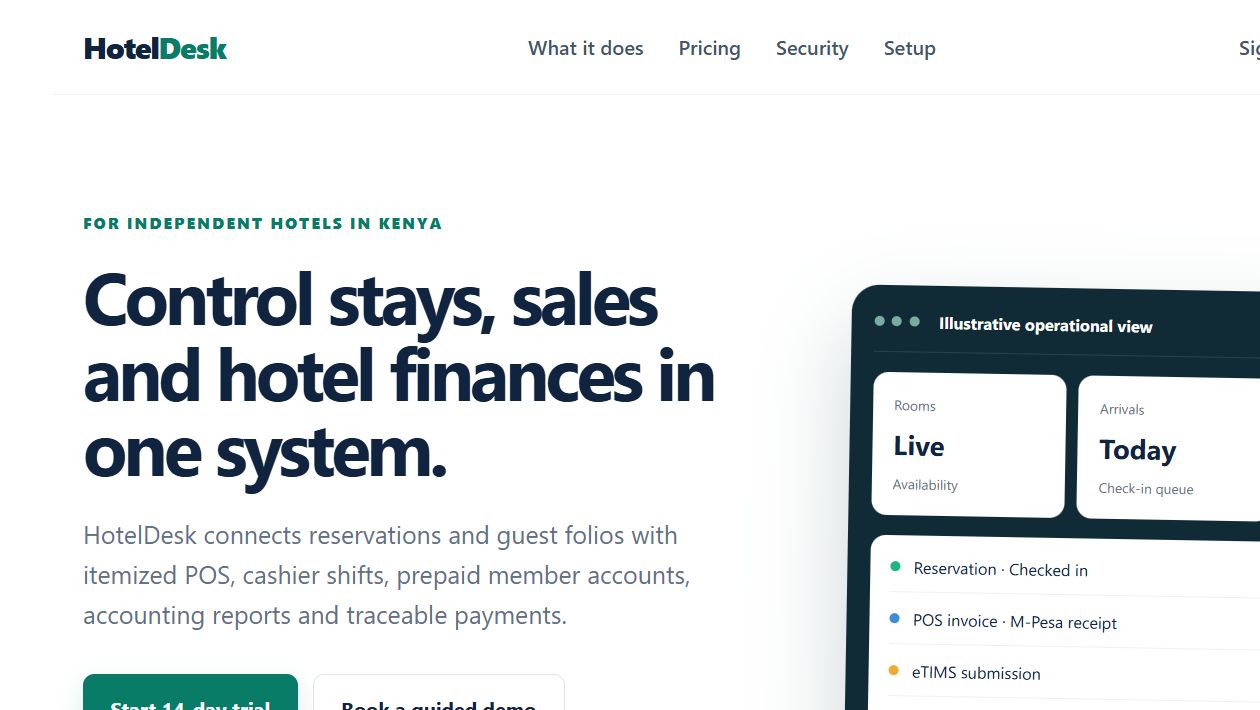
Hotel operations overview
The operating view connects room availability, arrivals, finance, POS, M-Pesa, and shift close. A buyer can assess whether the dashboard reflects the decisions staff make during a hotel day.
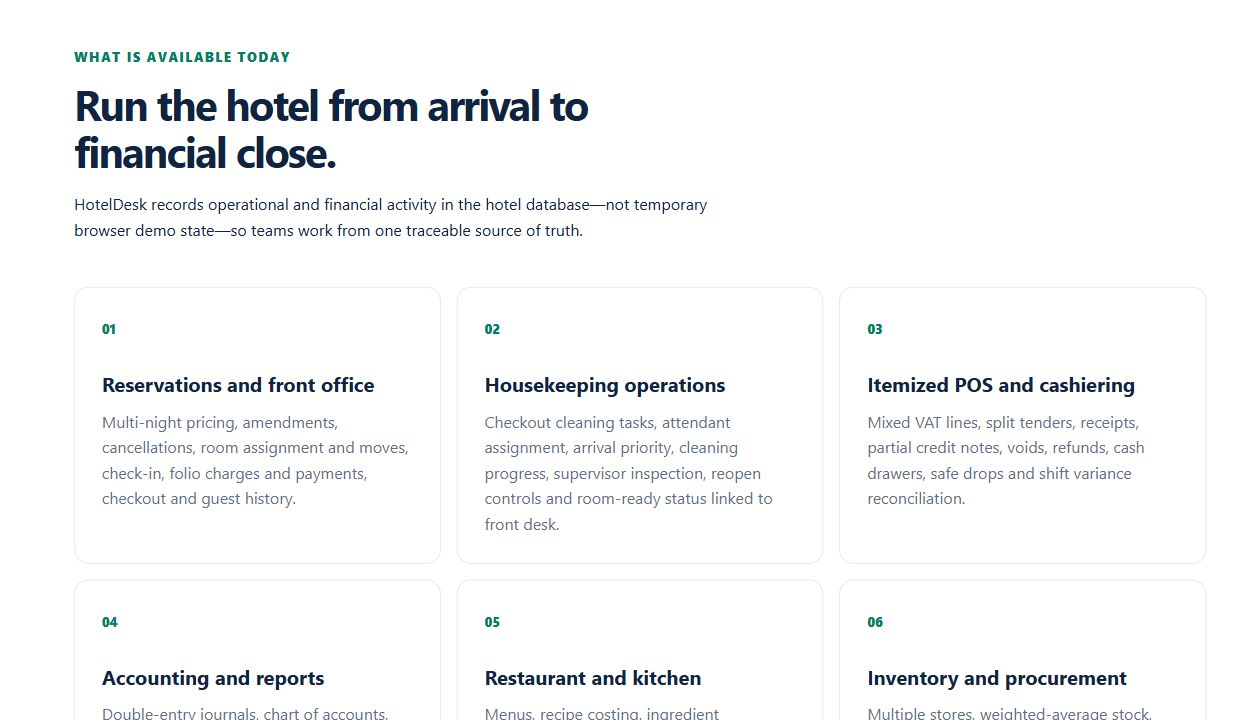
Hotel workflow modules
The modules cover reservations, housekeeping, cashiering, accounting, restaurant, inventory, staff, rates, and guest communication within one environment.
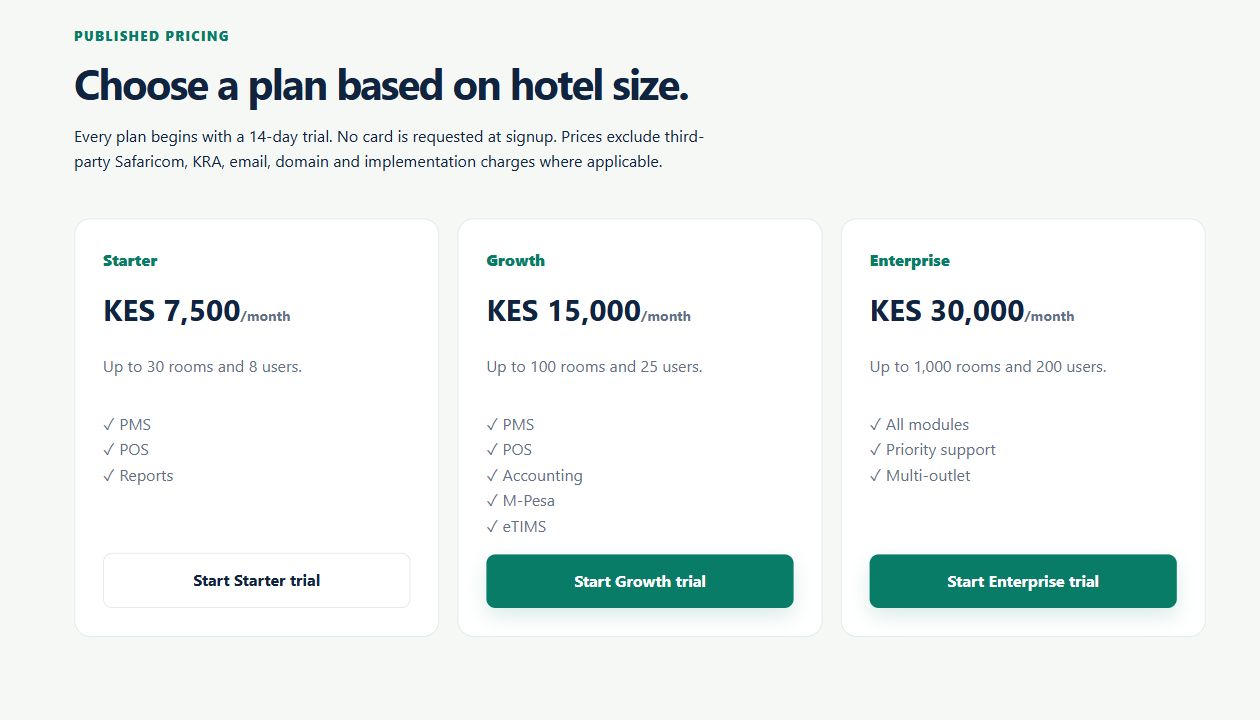
Published hotel plans
The plan evidence shows Starter, Growth, and Enterprise options structured around hotel size, room count, users, and required modules.
Why room status and the guest folio matter
Room availability needs both a commercial and operational truth. A room may be unsold but unavailable because of maintenance, cleaning, inspection, or another block. Reservations, walk-ins, amendments, extensions, cancellations, no-shows, room moves, and early departures must change availability consistently.
The guest folio connects charges and payments to the stay. Accommodation, restaurant, extras, adjustments, deposits, refunds, cash, M-Pesa, and approved credit need a visible history. Staff should not rewrite old transactions to make a folio appear correct. Permissions and traceable corrections help finance explain the final balance.
This connection between operations and finance is why hotel software is broader than a booking calendar. Buyers comparing suitable platforms can review Zamacore’s property and hospitality software in Kenya category for related products and workflows.
Housekeeping, restaurant, stores, and shift control
Housekeeping relies on departures, stayovers, room status, priorities, assignments, inspections, and maintenance exceptions. When completed work updates the shared room record, reception can make a safer check-in decision. Repeated faults or out-of-service rooms remain visible to management.
Restaurant and POS operations add orders, products, stock, cashiers, payments, and guest-room charges. Inventory movements should explain receiving, issues, sales, transfers, returns, damage, and adjustments. HotelDesk’s connected modules help keep these supporting operations within the same management environment.
Shift close brings together cashier activity, payment methods, receipts, exceptions, and responsibilities. M-Pesa control may require transaction references, allocation, duplicates, reversals, and reconciliation. Zamacore’s M-Pesa reconciliation software page explains those wider payment controls.
Accounting and management reporting
Hotel finance needs operational transactions to reach journals and reports under consistent rules. Room charges, restaurant sales, taxes, payments, adjustments, expenses, and settlement activity should remain traceable to their source. HotelDesk includes journals, trial balance, profit and loss, and operational reporting in its product scope.
Management can review occupancy, arrivals, departures, room status, revenue, payment methods, outlet activity, inventory, and finance without rebuilding every report from separate departmental files. Authorised users should be able to drill from a total into the underlying transaction or stay.
Organisations with broader multi-property, procurement, integration, or group reporting requirements can consider custom business software alongside the established HotelDesk platform.
Operational value without unsupported performance claims
The inspectable value is the connected hotel workflow. Reception can work from room and reservation information. Housekeeping can respond to arrivals, stayovers, and departures. Cashiers can attach appropriate charges and payments. Finance can follow transaction records into reports. Management can review the day from shared operating data.
This case study does not claim an unverified increase in occupancy, a specific reduction in check-in time, or a named hotel result that has not been approved for publication. Outcomes depend on rate strategy, staff adoption, data quality, payment setup, property operations, connectivity, configuration, and management controls.
During evaluation, a hotel can define measurable goals such as reservation errors, room-status delays, missing folio charges, unmatched M-Pesa payments, shift-close time, stock variance, or report preparation. These goals provide a credible basis for assessing product adoption after launch.
Adoption and product evaluation
Implementation begins with room types, room records, rates, taxes, users, payment methods, products, opening reservations, guest balances, and inventory. Existing data should be cleaned before migration. The team also agrees how reservations, walk-ins, changes, housekeeping, charges, payments, checkout, and shift close will be recorded.
A pilot should test a normal reservation and stay alongside a walk-in, cancellation, no-show, room move, extension, early departure, maintenance block, split payment, M-Pesa exception, restaurant charge, refund, and shift variance. These scenarios reveal whether responsibilities remain clear when hotel operations leave the ideal path.
HotelDesk publishes a 14-day trial without a card and monthly Starter, Growth, and Enterprise plans. Buyers should verify current pricing, room and user limits, included modules, third-party charges, and implementation needs. Bring sample booking sheets, rate plans, folios, receipts, M-Pesa references, room-status lists, and management reports to a demonstration.
Finance, reception, housekeeping, food and beverage, and management users should each validate the records and exceptions they own before rollout.
Inspect HotelDesk against your hotel operation
Review the current product evidence, then compare it with your rooms, reservations, guests, housekeeping, outlets, payments, accounting, and reporting workflow.