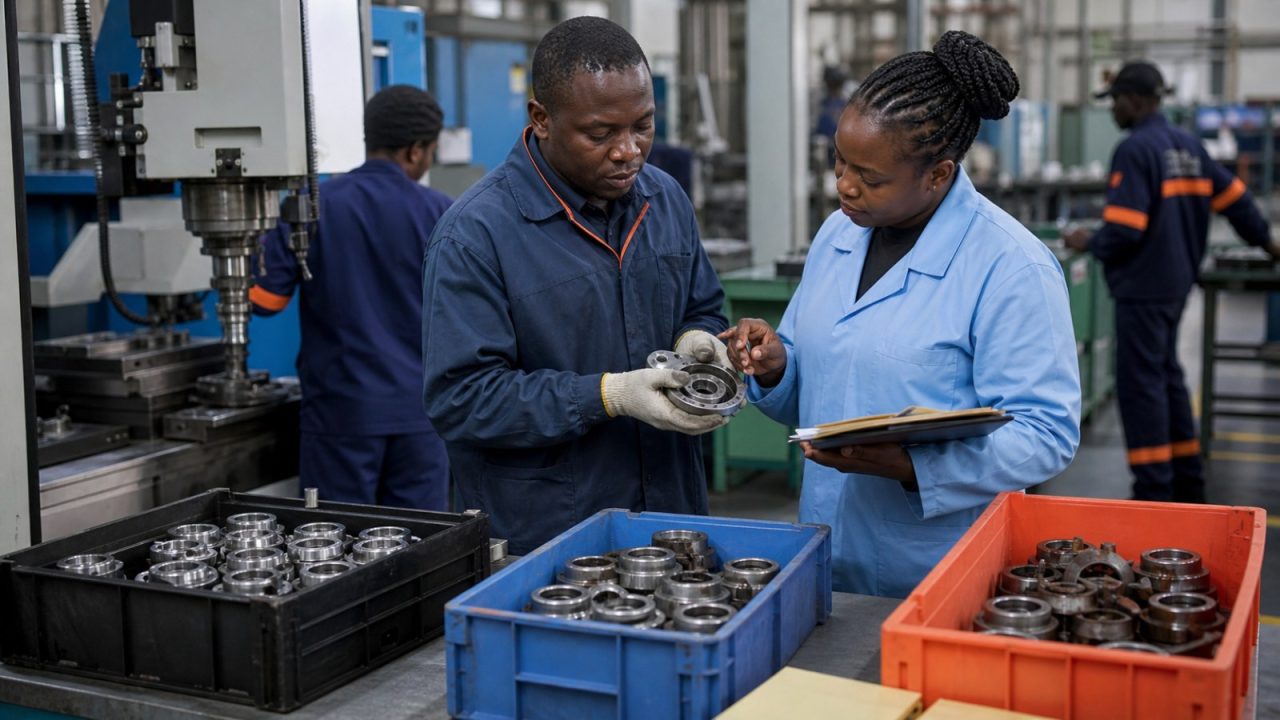
Record production loss at the point where it can be understood
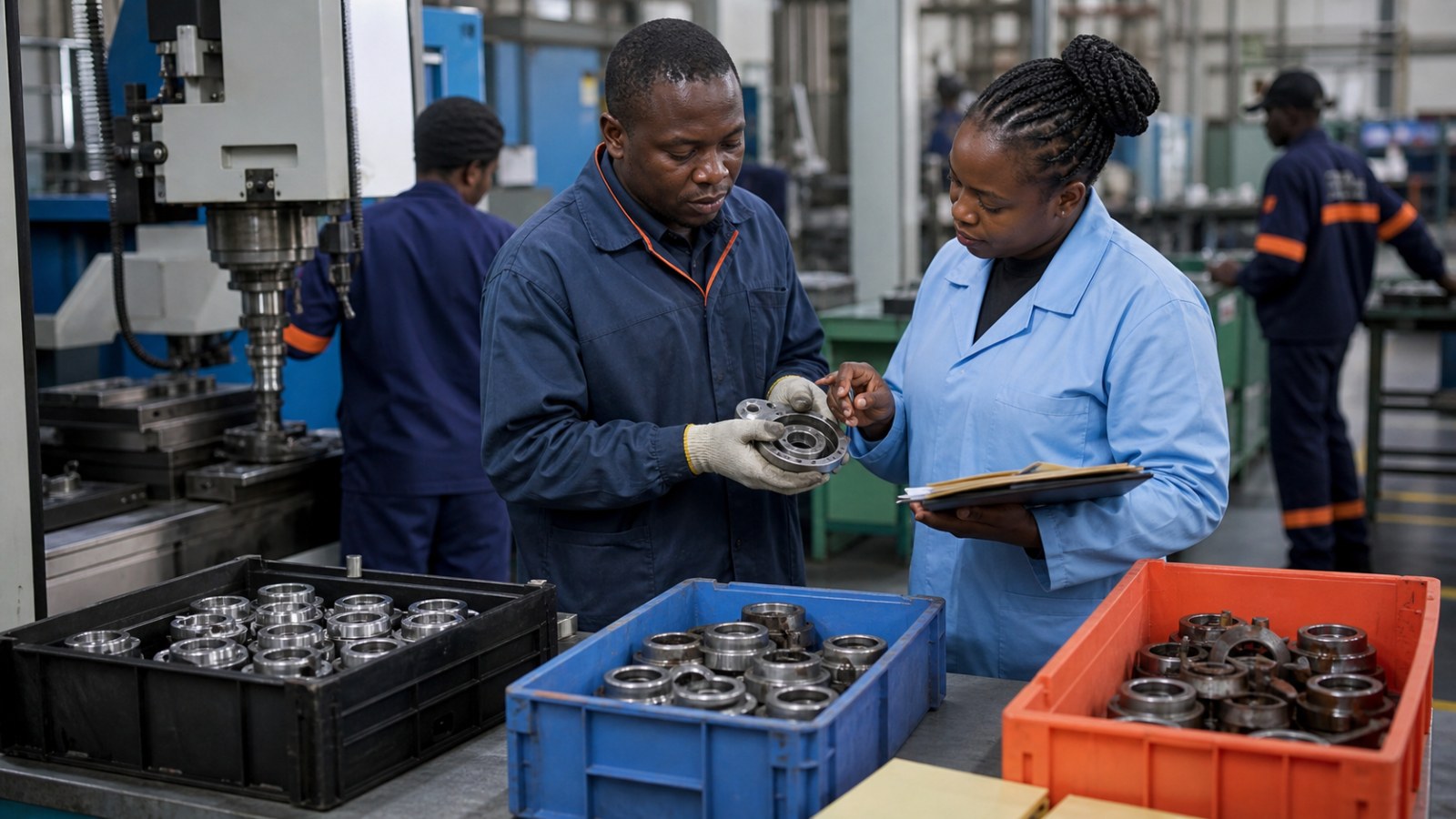
manufacturing scrap rework tracking software Kenya is useful when a business needs to control a specific operational decision, not when it merely wants another screen. A work order consumes material and reports finished output, but the difference is explained later as a general loss. Scrap bins, rework queues and rejected output are recorded inconsistently, so teams cannot agree whether the cause was material, setup, equipment, method, quality specification or handling.
Unclear loss records can distort yield and production cost, hide recurring process problems and create inventory balances that do not match the floor. Rework can appear as fresh production when its link to the original batch and defect is lost. The system needs to preserve quantity, status, reason and disposition together. This guide is written for production managers, quality leaders, process engineers, inventory controllers, finance teams and plant executives. It explains what to record, which exceptions must stay visible, how to structure a pilot and what a serious buyer should ask to see in a demonstration.
What the workflow should achieve
The workflow should capture expected and actual quantities at an appropriate operation, distinguish scrap from rework and other approved losses, record defect or reason evidence, and route disposition. Reworked output should remain linked to its original work context so yield and quality history can be interpreted responsibly.
This use case owns production-loss events and rework genealogy. It supports manufacturing planning, inventory, costing, quality and traceability, but it does not replace engineering judgement, safety procedures or the organisation’s accounting policy. That boundary matters because a narrow, complete workflow is easier to test than a broad promise. It also prevents this use case from competing with a general ERP, inventory, procurement or analytics page that owns a wider buying intent.
A useful design begins with the source transaction and ends with an authorised, traceable outcome. It should preserve the normal path and the difficult path: missing information, partial work, a rejected item, a late response, a correction and an approved override. If staff must leave the system and solve every exception through calls or private messages, management still lacks dependable operational evidence.
A realistic Kenyan operating scenario
A fabrication work order releases 500 components. After an operation, 462 are accepted, 18 require rework, 12 are scrapped and eight remain unaccounted for pending count. Some reworked pieces later pass inspection; others are scrapped after the second operation. The current report records only the final good quantity.
The demonstration should show the first loss event, defect and provisional status, authorisation for rework, material or labour used by the rework order, repeat inspection and final disposition. It should keep the eight-unit discrepancy visible rather than forcing it into a scrap reason just to close the work order.
During discovery, bring actual forms, spreadsheets, transaction samples and reports with sensitive details removed. Name the people who create, check, approve, correct and use the record. This gives the implementation team enough context to distinguish required controls from habits that can be simplified.
The records and definitions to agree first
Reliable loss analysis depends on item and unit, work order, operation or work centre, material issue, expected yield where defined, batch or lot relationship where relevant, controlled defect and cause categories, and authorised scrap or rework dispositions.
- Accepted output: quantity meeting the approved completion and quality status at the selected operation.
- Scrap: quantity formally determined not to proceed through the intended process, with an authorised disposition.
- Rework: quantity requiring additional approved processing before it can be accepted or otherwise dispositioned.
- Process loss: an approved category for quantity consumed or lost by the process under a documented definition.
- Unexplained difference: a quantity gap awaiting investigation, not a convenient scrap category.
- Yield: the relationship between defined input and acceptable output for a stated operation or work order.
Agree these definitions in plain language and nominate a data owner for each one. The same term can mean different things to stores, finance, production, quality and sales. A system cannot produce trusted reports when departments use different units, dates, statuses or reasons for the same event. Controlled lists should therefore be reviewed deliberately rather than expanded whenever a user wants a new label.
A practical end-to-end process
- Establish the work context. Identify work order, item, operation, batch where relevant, released quantity and approved expected-output basis.
- Capture the observed loss. Record quantity, unit, time, operation, observed defect or condition and the person reporting it.
- Separate provisional status. Keep suspected scrap, rework and unexplained difference distinct until the required review or disposition.
- Authorise disposition. Route use-as-is, rework, return, scrap or other approved decisions according to quality and operational authority.
- Execute and inspect rework. Link additional work, material and repeat quality outcome to the original quantity and defect.
- Close and analyse. Reconcile good, reworked, scrapped and unresolved quantities, then review repeated losses by relevant context.
Each stage should have an entry condition, responsible role, permitted action and visible completion rule. Notifications can help, but a message is not the workflow. The authoritative record must remain searchable inside the system, including what changed, who decided, why an exception was accepted and which downstream record was updated.
Exceptions the demonstration must include
The happy path is usually the easiest part of a software demonstration. Operational value appears when the team can see, own and resolve deviations without corrupting the original record. Ask the vendor to demonstrate these representative cases:
- Loss discovered after the operation. Record the discovery point and likely origin separately so timing does not become a false cause.
- Rework is repeated. Preserve each rework cycle, decision and outcome rather than counting the same quantity as new output.
- Unit conversion is unclear. Stop the close or route review until pieces, weight, length or other units reconcile under an approved conversion.
- Scrap can be recovered or sold. Keep operational scrap quantity distinct from any later recovery or finance treatment and use authorised disposition records.
- Output difference has no cause. Maintain an unexplained category with an investigator and deadline rather than misclassifying it to complete the order.
An exception should not be deleted merely because it is uncomfortable. It needs a reason, evidence where appropriate, an owner, a next action and a final disposition. Over time, exception patterns help process owners improve supplier instructions, training, maintenance, product design or approval rules without relying on anecdotes.
Roles, permissions and segregation of duties
The operator can report what was observed, but quality or production authority may own disposition, inventory controls the material movement and finance determines approved cost treatment. The design should preserve these distinctions without making reporting so slow that losses remain off-system.
- Operator: reports quantity, observed defect and operation close to the event.
- Production supervisor: confirms work context, containment and operational cause review.
- Quality reviewer: controls defect classification, acceptance and disposition where required.
- Rework owner: plans and records additional processing and result.
- Inventory controller: confirms status and material movements for scrap and rework.
- Finance or costing reviewer: uses authorised quantities without altering production evidence.
A permission model should be demonstrated with real role scenarios. Ask who can create, edit, approve, reopen, cancel, export and configure a record. Shared accounts weaken accountability. Broad administrator access should be limited, reviewed and logged. Temporary delegation should record the delegating person, substitute, effective period and actions taken during that period.
Capabilities worth putting in the scope
A request for proposal becomes more useful when it describes testable behaviour rather than asking whether a product has a module with a familiar name. For this workflow, consider the following capabilities and confirm which are standard, configurable or require development:
- Work-order, operation and batch-context capture
- Accepted, scrap, rework, process-loss and unexplained quantity separation
- Controlled defect, cause and disposition categories
- Supporting evidence and inspection result attachment
- Quality hold and authorised disposition routing
- Rework order or task linked to original event
- Multiple rework cycles with preserved genealogy
- Inventory status and movement linkage
- Quantity reconciliation before work-order close
- Loss and yield views by item, operation, batch, shift and approved reason
Not every organisation needs every capability in the first release. Classify requirements as essential for the pilot, needed for rollout, or a future improvement. This keeps the first implementation coherent while preserving a documented path for later phases.
Integrations, identifiers and failure handling
The workflow may connect work orders, material issues, production output, quality inspection, inventory status and manufacturing cost records. Define which system creates scrap and rework movements, how reversed or corrected production is reflected, and how finance receives approved quantities without rewriting the operational event.
For every connection, name the source of truth, matching identifier, direction of data, update frequency, permitted fields and reconciliation owner. Ask what users see when an interface is unavailable, a record is rejected, a duplicate is detected or a message arrives out of sequence. A successful technical response is not the same as a completed business transaction.
Data migration deserves the same care. Clean a representative sample before estimating the full effort. Preserve original references where they are needed for audit or lookup, document transformations, and reconcile control totals after loading. Historical data can be archived or migrated at different levels, but the decision should be explicit and tested.
Operational views and management reporting
Supervisors need unresolved loss and rework queues. Quality needs defect and disposition patterns. Inventory needs quantity and status reconciliation. Finance needs authorised quantities and cost context under its policy. Management needs loss frequency and quantity by product, operation, work centre, material, shift and cause, with drill-down to work orders.
Every headline measure needs an agreed formula, reporting period, data owner and drill-down path. Terms such as open, late, rejected, completed, available, loss and value are not self-explanatory. An authorised manager should be able to move from a summary to the transactions behind it and see when the data was last updated.
A dashboard should prompt action rather than decorate a meeting. Define which threshold creates an alert, who receives it, what response is expected and when an unresolved issue escalates. Keep the first dashboard small enough that each measure has an owner and a practical response.
Security, privacy and audit evidence
The workflow should collect only information required for its operational purpose and restrict it according to responsibility. Buyers should review authentication, session management, sensitive exports, approval authority, configuration changes, backup restoration, retention and incident response in proportion to the risk. If external users participate, their access must remain limited to the records and actions intended for their organisation.
An audit history is useful when it can answer: who created the record, what changed, which value was replaced, who approved the decision, when it became effective and what happened downstream. Corrections should preserve the original event and the authorised reason instead of silently rewriting history. Export and deletion rules should be agreed before launch, not invented during an investigation.
How to run a controlled pilot
Pilot one product family and operation where scrap and rework are visible and decisions have clear owners. Include normal yield, immediate scrap, quality hold, one and two-stage rework, recovered output, final scrap, a unit-conversion issue and an unexplained difference.
- Map quantity flow. Trace released material, operation input, accepted output, work in progress, rework, scrap and unexplained difference.
- Simplify reason categories. Separate observed defect, investigated cause and final disposition rather than asking operators for one overloaded code.
- Agree authority and status. Define who can hold, approve rework, accept, scrap, reverse and close.
- Connect inventory movements. Test physical and system treatment for every disposition and correction.
- Reconcile representative orders. Ensure all quantities and units explain the released and completed position.
- Review recurring loss. Use evidence from several cycles to select one improvement question and verify later records.
At the pilot review, separate configuration defects, data problems, training gaps, process-policy questions and genuinely new scope. Record decisions and re-test the affected scenario. Expansion should depend on acceptance evidence and user readiness, not on a demonstration that covered only the normal path.
Measures that can show whether the process is improving
Record a baseline before changing the process. Useful measures for this use case can include:
- Accepted, rework, scrap and unresolved quantity by work order
- Loss quantity and frequency by operation and approved cause
- Rework tasks waiting for processing or inspection
- Quantities passing and failing after rework
- Work orders blocked by unreconciled output
- Repeated defects by item, material, resource or shift context
- Corrections or reversals after work-order close
- Time from reported nonconforming output to final disposition
These are measurement candidates, not promised results. Select only the measures the organisation can define and collect consistently. Document changes in volume, seasonality, product mix or policy that could affect the comparison. Credible operational learning is more valuable than an unsupported return-on-investment claim.
Common implementation mistakes
- Using scrap as a catch-all for every unexplained quantity difference
- Asking operators to choose a root cause before investigation
- Counting reworked output as entirely new production
- Losing the link between rework and the original batch or work order
- Mixing operational quantity evidence with unapproved accounting assumptions
- Closing work orders before quantity and unit reconciliation
- Creating too many defect and cause codes for consistent use
Put the relevant risks into the project register with an owner and decision date. A polished interface cannot compensate for missing process owners, unreliable master data, unavailable frontline users or acceptance tests that were never agreed.
Questions to use in a serious software demo
- Can scrap, rework, process loss and unexplained difference remain distinct?
- How is the observed defect separated from investigated cause and disposition?
- Can several rework cycles stay linked to the original work order and quantity?
- What prevents held or rework stock from appearing as normal accepted output?
- How are quantity units and conversions reconciled?
- Who can authorise rework, use-as-is, scrap or reversal?
- Can inventory movements be traced back to the production-loss decision?
- Which reports expose repeated loss by operation without hiding unresolved records?
Use representative but de-identified records for the demo. Ask the presenter to complete the transaction rather than describe what could be configured later. Note which behaviour is available now, which requires configuration, which requires integration and which is outside scope. Confirm discovery, implementation, hosting, support, security updates, data export, source-code terms where relevant and exit arrangements in writing.
Related ZamaCore resources
- ERP software development in Kenya
- production cost tracking system
- batch traceability software
- production planning software
- contact ZamaCore
Frequently asked questions
What is the difference between scrap and rework?
Scrap is quantity formally dispositioned not to continue through the intended process, while rework is quantity approved for additional processing before another quality outcome. Organisations should define these terms and statuses so the same units are not counted twice or treated as accepted prematurely.
Should operators record the root cause?
Operators can record the observed defect or condition and useful context. A root cause may require production, maintenance, quality or engineering investigation. The system should support that later evidence rather than force a quick classification that makes reports look complete but unreliable.
How should rework affect yield?
The treatment depends on the operation and approved reporting definition. What matters operationally is preserving the original quantity, each rework cycle and final outcome so management can understand the total processing required and avoid counting recovered units as unrelated new production.
Can scrap have a recovery value?
It may, depending on material and the organisation’s authorised commercial and accounting treatment. Operational software should preserve the scrap quantity, status and disposition. Any later recovery, sale or finance entry should remain connected but should not change the original production evidence invisibly.
What is a useful pilot?
Choose a product and operation with real scrap, holds and rework. Test immediate and later discovery, multiple rework cycles, accepted and failed rework, unit conversion, inventory movements, an unexplained difference and a corrected record before expanding.
Discuss this workflow with ZamaCore
Bring one work order with a difficult yield reconciliation so ZamaCore can map observed loss, disposition, rework, inventory movement and management evidence. ZamaCore can review the workflow through an online demo or an appointment-based in-person discussion at the Zama Systems office in Karuguru Plaza along Eastern Bypass. Bring a representative form, spreadsheet, report or de-identified transaction so the discussion stays grounded in the way your team actually works.