Farm management software in Kenya should turn daily farm activity into records that owners and managers can trust. Inputs, labour, machinery, leases, harvests, livestock, purchases, sales, and expenses often begin in different notebooks or spreadsheets. The result is delayed reporting and uncertainty about production cost, stock, and profitability.
A useful system connects those records around the farm’s real operating structure. See Zamacore’s agriculture and trade software category and the verified FAMA product page while using this guide.
Begin with the records your farm already keeps
Before comparing software, list the records currently used by the farm. Common examples include field and crop records, input purchase and issue sheets, machinery service logs, fuel records, staff attendance, salary advances, harvest records, livestock health work, sales, and expenses.
The software should make these records easier to capture without losing the detail needed for accountability. A dashboard is valuable only when its figures can be traced back to daily entries.
Farm workflows worth testing
- Lease and land records: Track lessors, rented acres, payments, balances, and expiry dates.
- Inputs and stores: Record purchases, suppliers, stock balances, and issues to a field, crop, or lease.
- Machinery and fuel: Manage tractors, drivers, service reminders, repair costs, and fuel activity.
- Staff and labour: Keep profiles, attendance, salaries, advances, and deductions connected to farm work.
- Harvest and inventory: Record production, stock movement, tools, spare parts, sales, and remaining produce.
- Livestock: Register animals or groups, health work, production, buyers, and livestock sales.
- Accounting and reports: Connect purchases, expenses, income, balances, and operational reports.
What management should be able to see
Farm owners need more than activity totals. They should be able to review stock value, input usage, lease balances, staff costs, machinery readiness, production, sales, expenses, and profit signals. Managers need alerts that point to action, such as low stock, an upcoming service, or an expiring lease.
Role-based access is important when several people record work. A storekeeper, accountant, supervisor, farm manager, and owner should not all have identical permissions. Ask the vendor to show how entries and sensitive changes remain traceable.
Review FAMA as a Kenyan farm platform
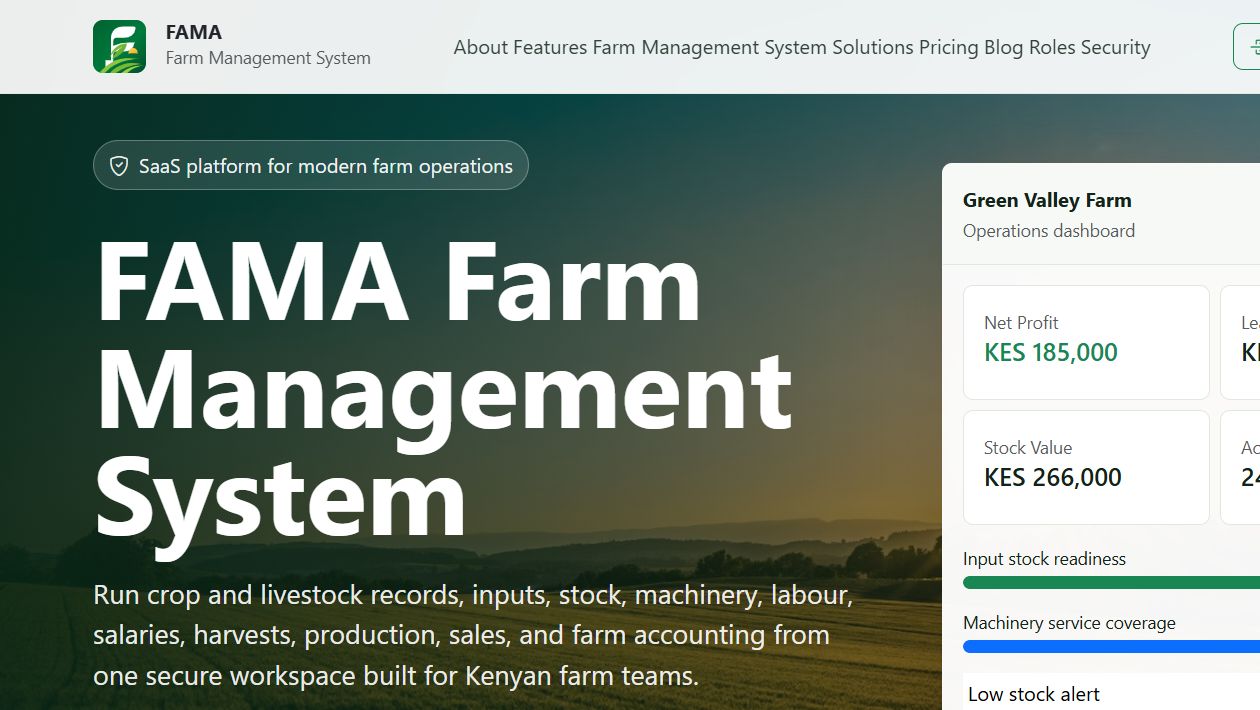
FAMA brings leases, inputs, machinery, staff, harvests, inventory, livestock, accounting, and reporting into one farm workspace. Its evidence page includes a real public operating view, module screens, a visual walkthrough, and published pricing.
The current FAMA Standard price is KES 3,750 per month, billed quarterly at KES 11,250 for one farm workspace. Evaluate the modules, onboarding work, data preparation, user roles, and support requirements alongside the subscription price.
Plan implementation around one production cycle
A practical rollout starts with the farm structure and opening records, then trains each role on the transactions they own. Choose a clear start date and decide whether old records will be imported or retained as an archive. During the first weeks, management should review data quality frequently so mistakes are corrected before they affect reports.
Next step: Explore the agriculture and trade solutions category and inspect the real workflow, plan, and trial path on the FAMA product page.